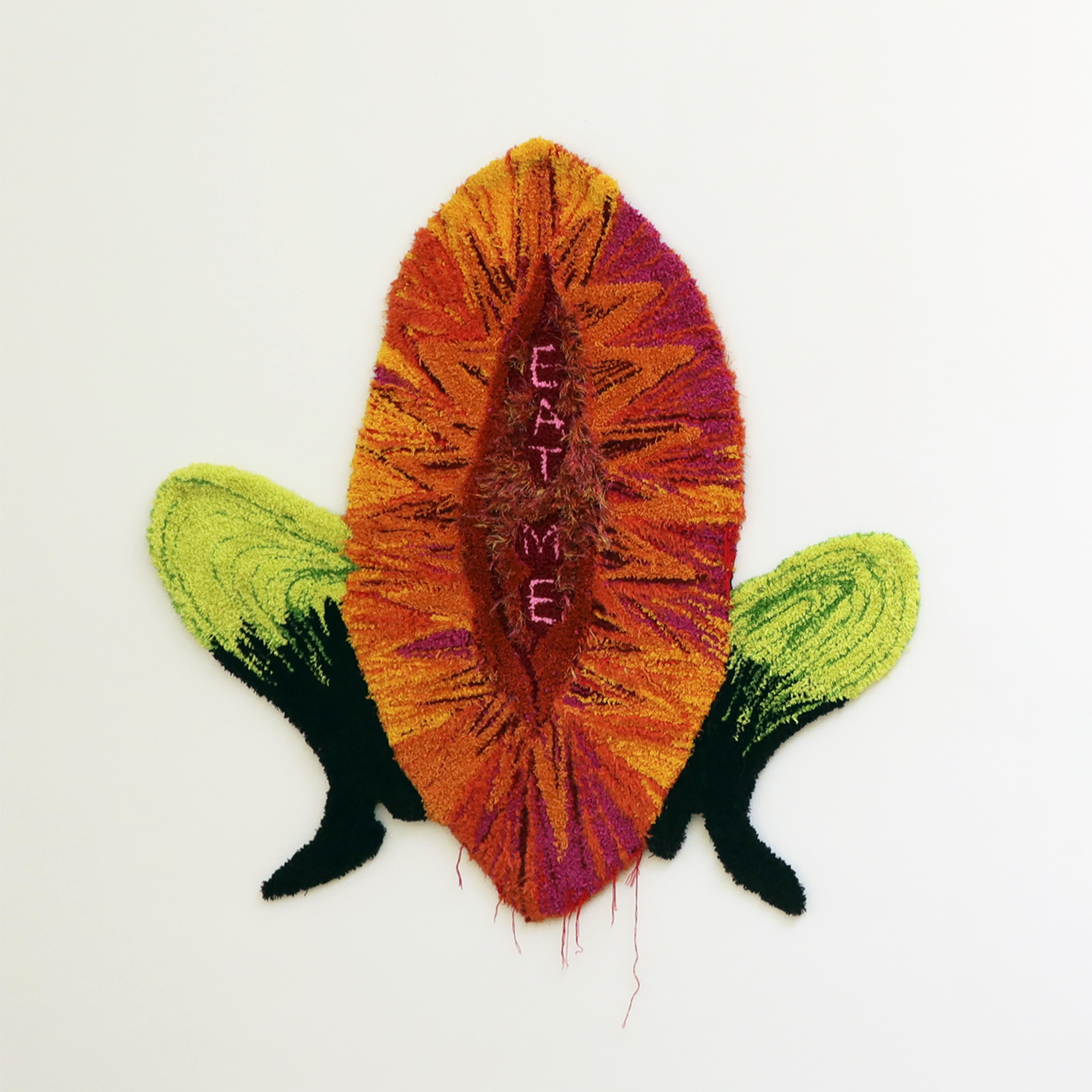
Artist: Zula Tuvshinbat
Eat me
tapestry, wool, 2023
This artwork is part of the exhibition Imagining Queer Utopia, curated by me (Michał Rutz) at Queer Museum Vienna.
Eat Me depicts a giant vulva shown frontally, flanked by a pair of spread, crouching legs in black boots. At its center appears both the challenge and the title of the artwork: “EAT ME.”
Divine Pleasure
Zula depicts the vulva in a highly stylized manner — through flat, vivid planes of color and dynamic lines that lend it a graphic quality. From the center of the composition, numerous rays spread outward like an explosion in shades of orange, red, and pink. Both the expressive color palette and the monumental scale point to the power of an intensely overwhelming experience — orgasm.
Divine Boundary
The shape of the vulva evokes a religious symbol, namely the mandorla. The mandorla — a halo with a distinctive almond-like form — traditionally surrounds sacred figures. It marks the boundary between the human and the divine.
In this way, Zula links the sacred with the body, creating a unique portal in which the divine and the erotic overlap — not as opposites, but as complementary forces.

Mysticism and Sensuality
In Georges Bataille’s view, religious ecstasy and orgasm have both a bodily and a spiritual dimension. Eroticism melts away the boundaries of the “self” and connects the individual with something infinite and sacred. The subject is dissolved in ecstasy, and its separateness is erased. In this context, the absence of the figure’s head may signal a loss of self in divine pleasure.
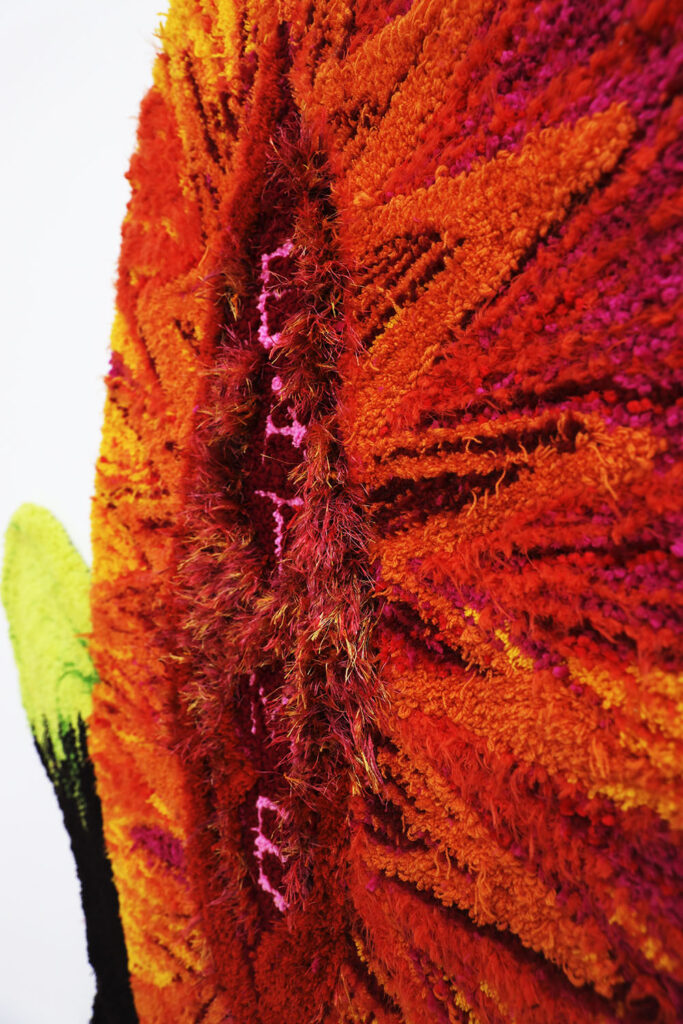
Come closer: Between Temptation and Threat
The enormous lips may appear threatening — large enough to engulf the viewer. Their scale and colors (green legs and a warm-toned interior) evoke associations with a carnivorous plant — the Venus flytrap.
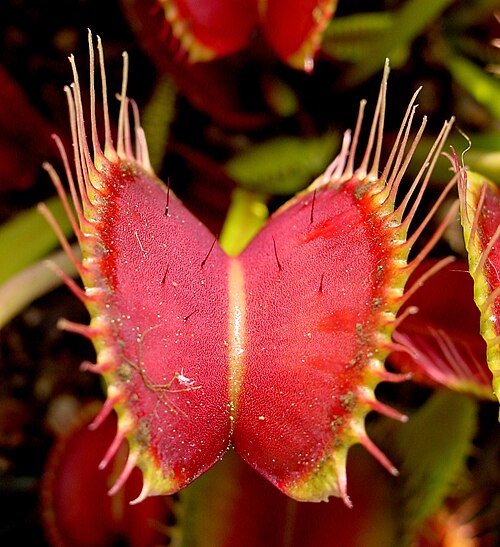

In this context, the interpretation of the title EAT ME becomes more complex. On one hand, the spread legs suggest an invitation to “consume” the vulva, emphasizing the erotic meaning of the phrase — oral sex. On the other hand, the association with the Venus flytrap restores its literal sense — eating and being devoured.
So who is to be “eaten”? Is this a trap, or an erotic game thriving on risk? Perhaps “Eat Me” is a flirtatious invitation to play — a challenge that could end in death?
Who will bring their head dangerously close between the parted lips? Who is not afraid of being devoured (by pleasure)? What are you willing to risk to taste it?
Come closer. Eat me.
To experience ecstasy, one must surrender — give oneself to the divine lover.
A new iconography of devotion, seduction, and allure blooms out of the woven languages of mysticism, botany, and eroticism. The shame is forgotten. The vulva becomes divine and wild and challenges us to follow our desires even if we risk dissolving ourselves in the process.
Michał Rutz
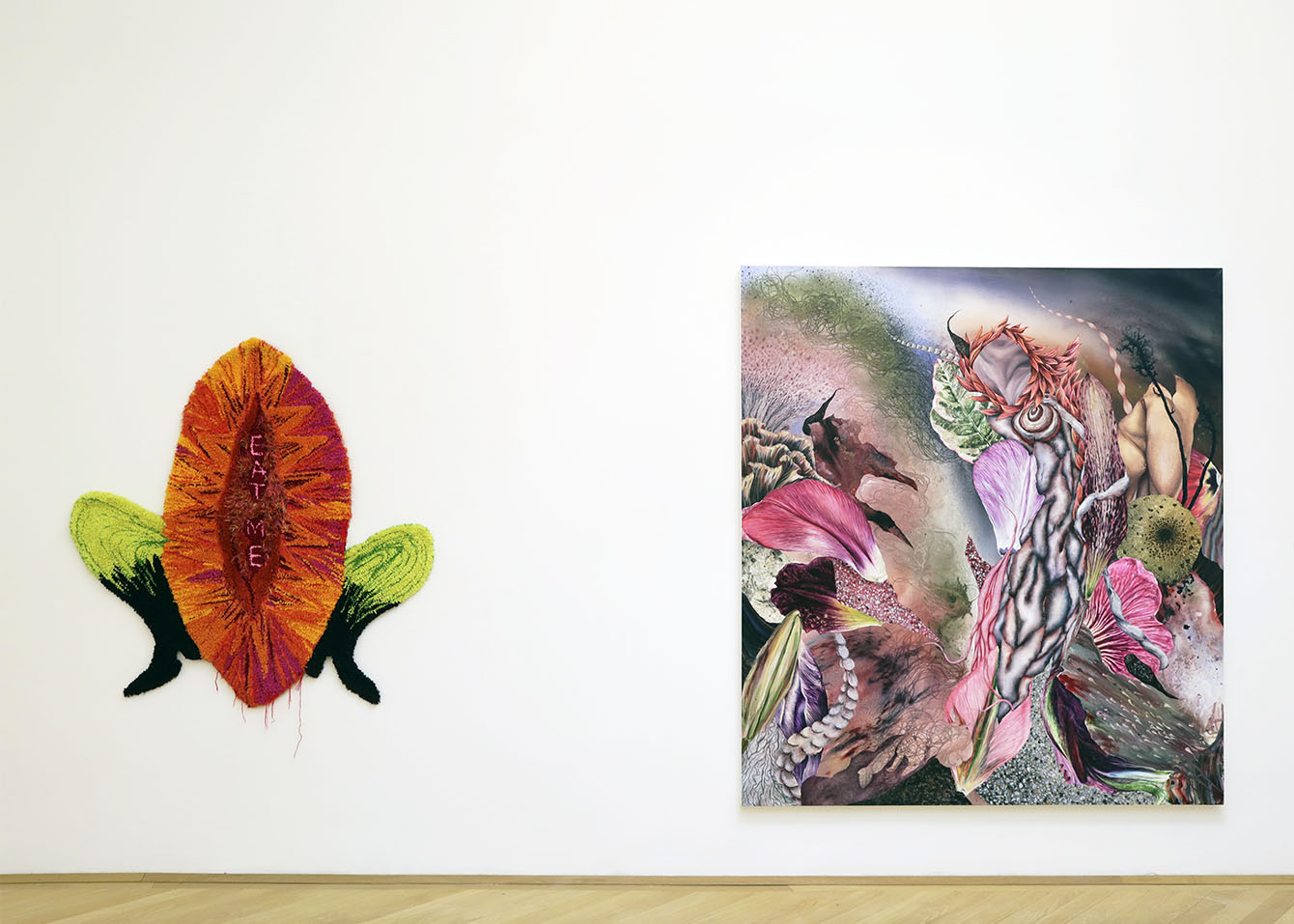
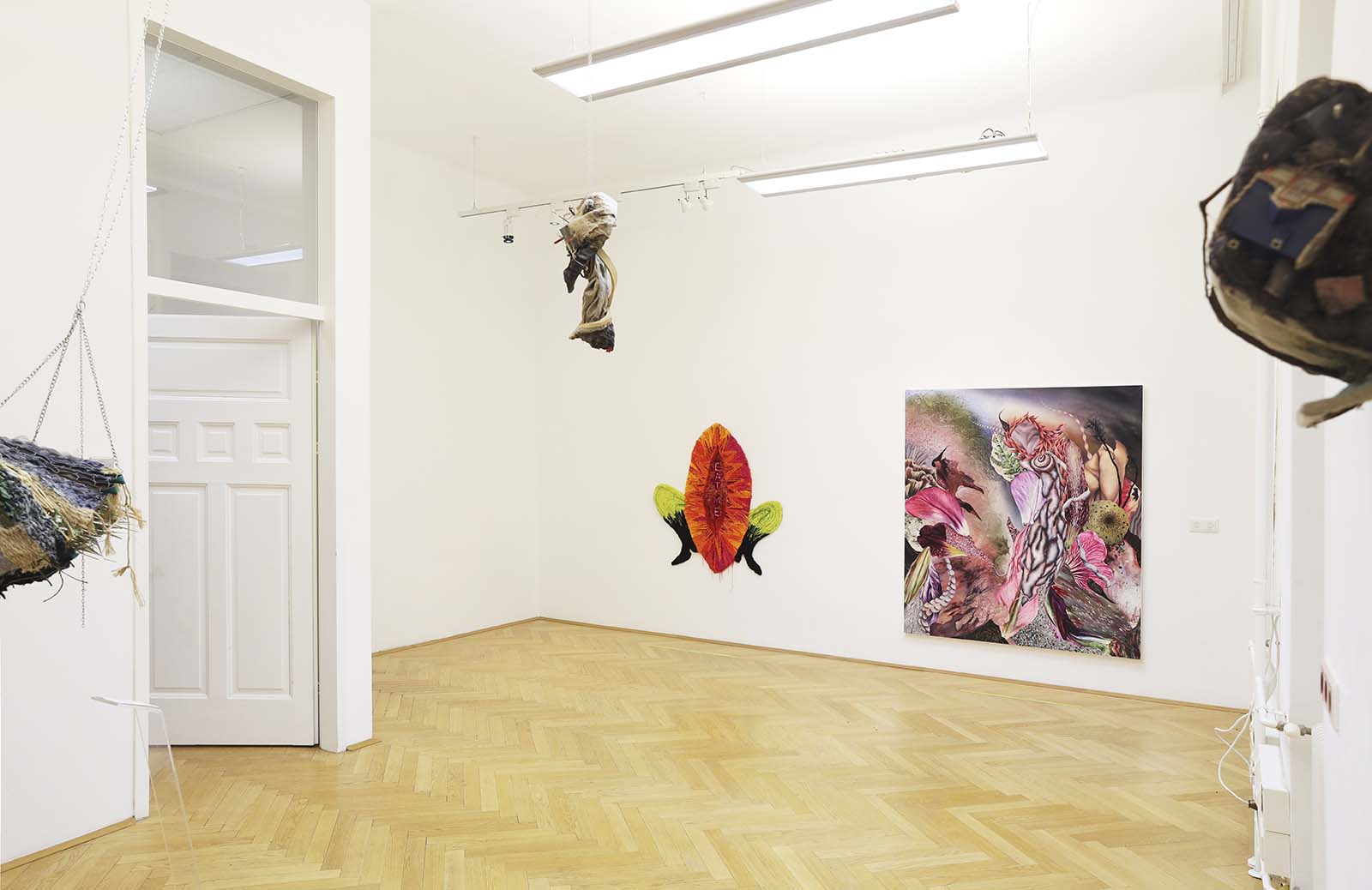
Unruly organisms
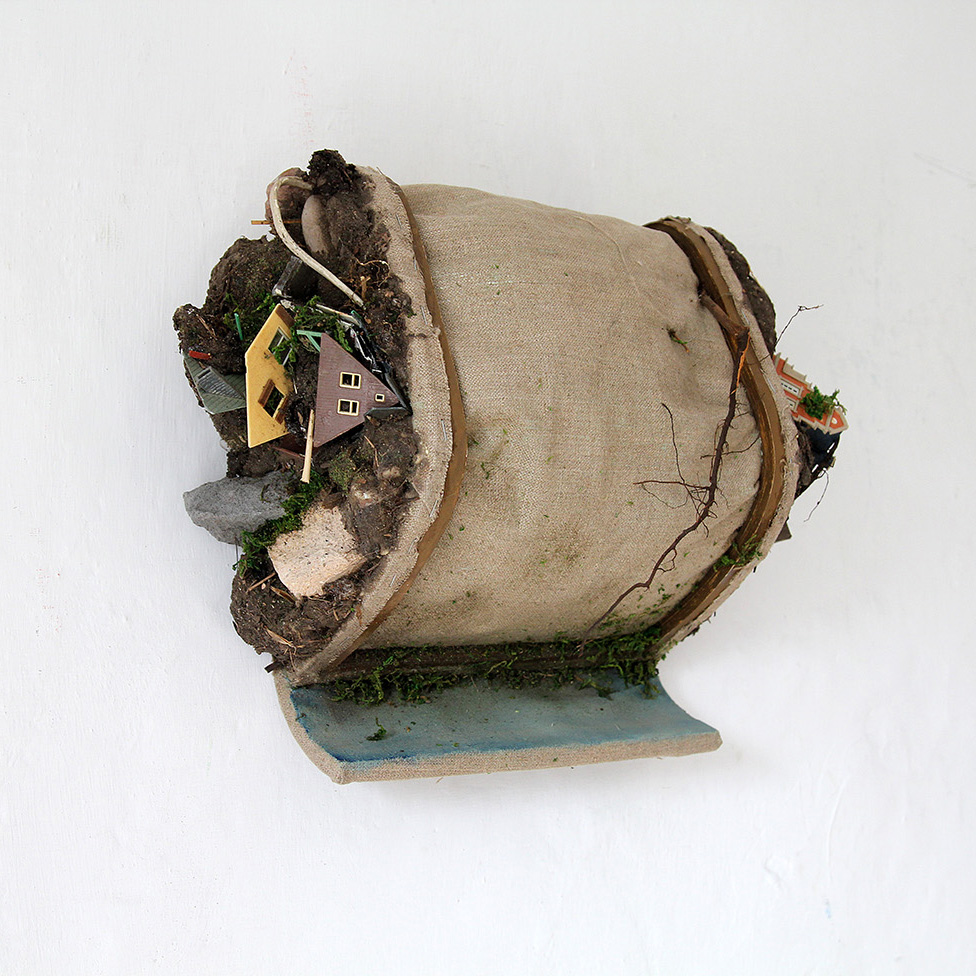
Both Zula’s and Bartosz’s artwork appear as living, unruly organisms—each dominated by a mouth-like form with an insatiable appetite. Devouring jaws become the threshold to a new reality.
Continue reading about Bartosz Kokosiński’s Painting Devouring a Rural Landscape.