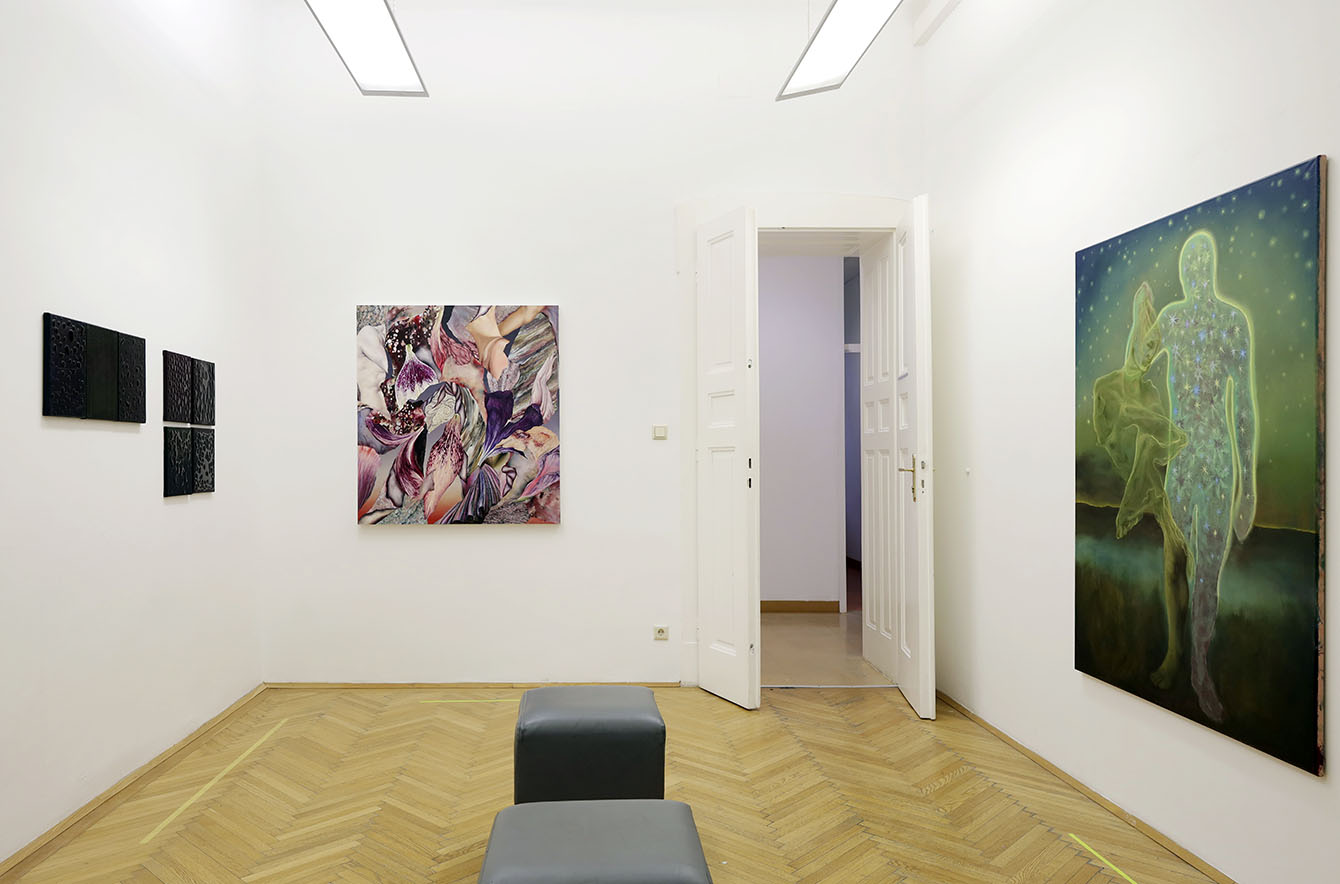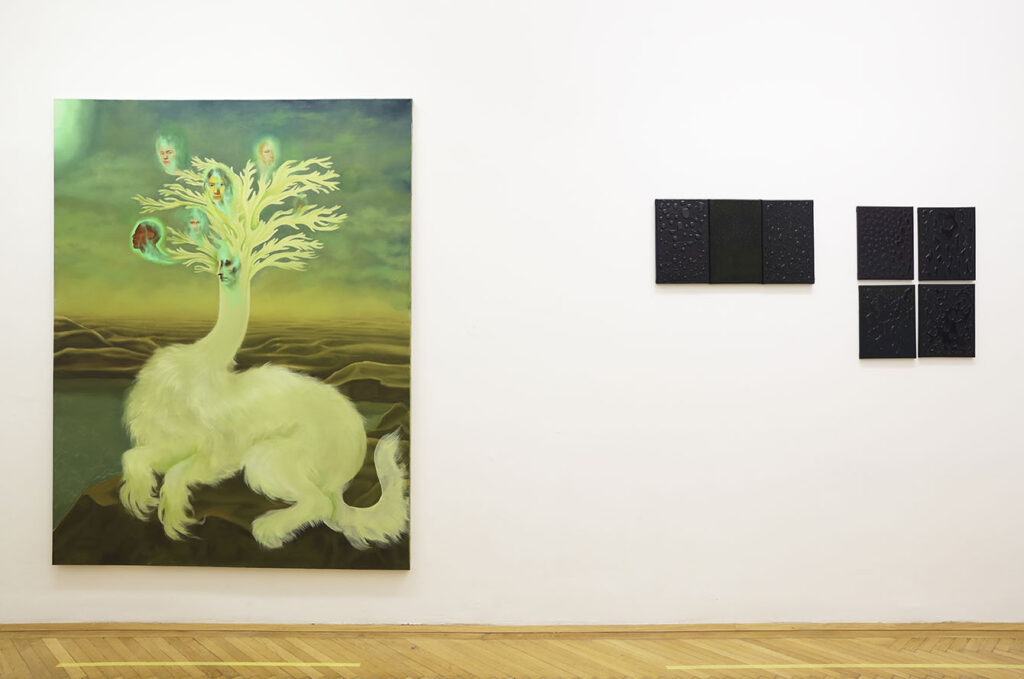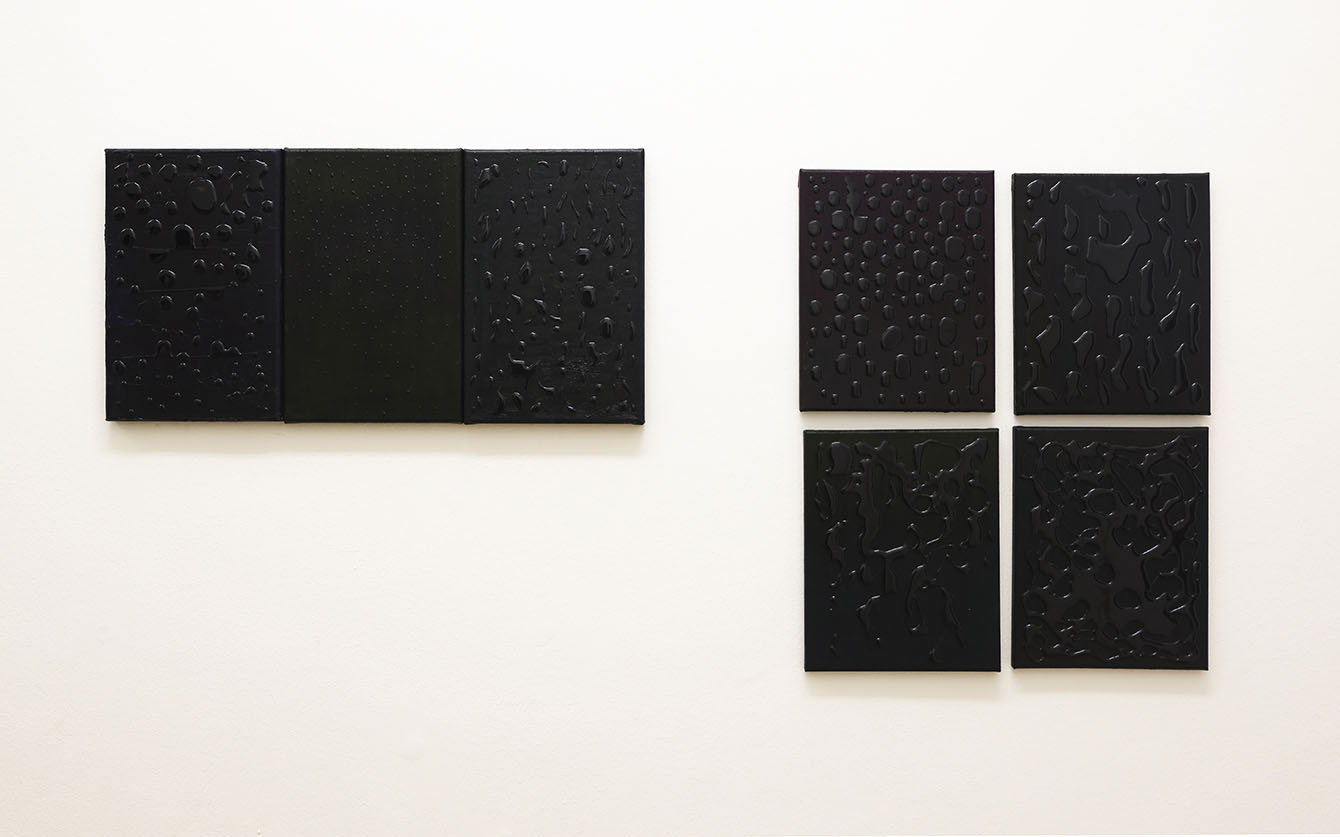
Artist: Bartosz Kokosiński
Titles: Q7bR9k / J3mK9y / nV4zF5 / P1nS6v / tW5jS2 / eP2qF7
Oil and resin on canvas, 2025.
Action vs. Non-Action Painting
Action painting, as practiced by Pollock, focuses on the artist’s aggressive gesture. The paint is a passive medium, obediently following the brush and extending the artist’s ego, taking direction and form from human intention.
In contrast, Kokosiński allows the paint to drip freely, giving the drops the ability to shape their own forms. In this way, he cedes control over the painting and shifts attention to the activity of the material itself, letting it co-create the final outcome.
Vibrant Matter / Active Agency
Jane Bennett emphasizes that matter is active, not passive – objects, substances, and the forces that shape them possess their own agency and can influence outcomes. Kokosiński’s method, in which paint drops determine the final form of the work, is a practical embodiment of this theory. The paint becomes a participant in the creative process, acting independently of the artist’s intentions.
Decentering the Human
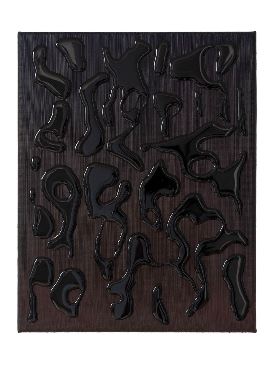
While Pollock’s works often celebrate the artist’s energy and identity, Kokosiński’s approach rejects this egocentric perspective. The painting becomes a space of interaction between human and non-human forces, sometimes privileging the latter. Focusing on the material as an active agent shifts attention away from the human, presenting the world in a more decentralized and open manner.
Although Pollock is known for gesture and compositional control, it is worth noting that his painting also accommodates elements of chaos and material unpredictability. Paint drips, penetrates layers, and responds partially independently of the artist’s intention. Kokosiński goes further — or perhaps takes a step back — consciously withdrawing and relinquishing dominance over the material.
The painting seems to emerge like raindrops running down a windowpane, without effort or resistance. Kokosiński directs our attention to these micro-interactions, rejecting the hubris of humanism and shifting emphasis from the human to the material itself.
Michał Rutz