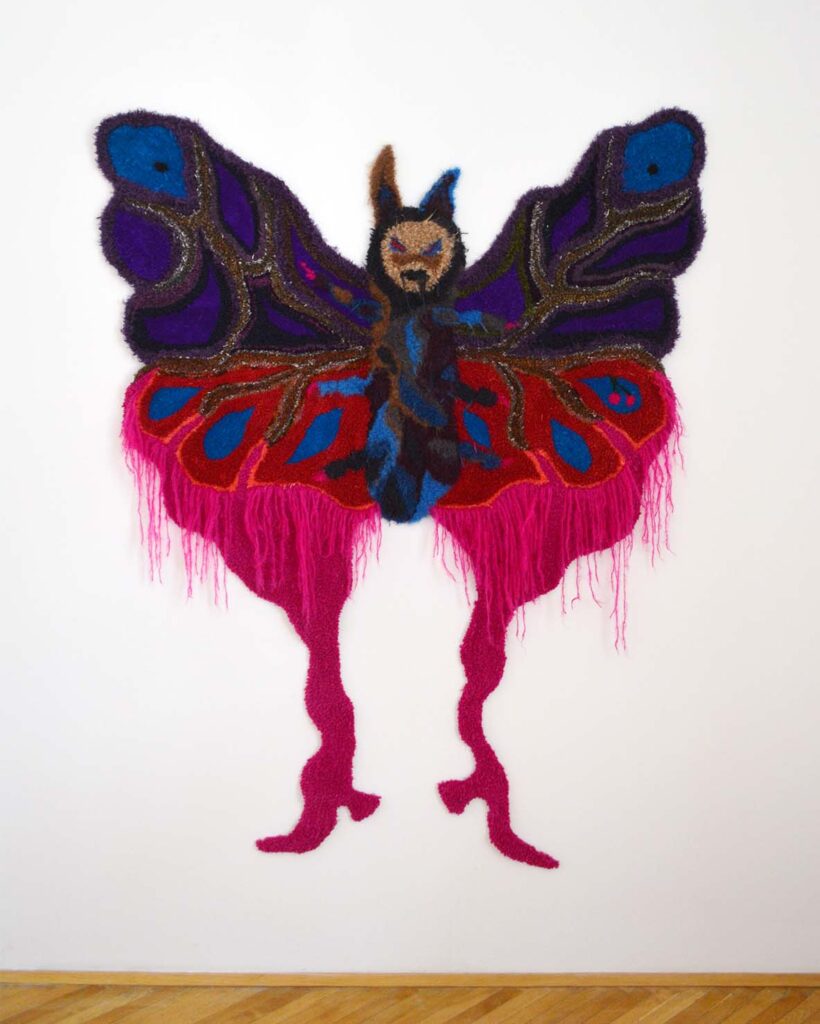
Artist: Zula Tuvshinbat
Titel: Mother
tapestry, wool, 2025
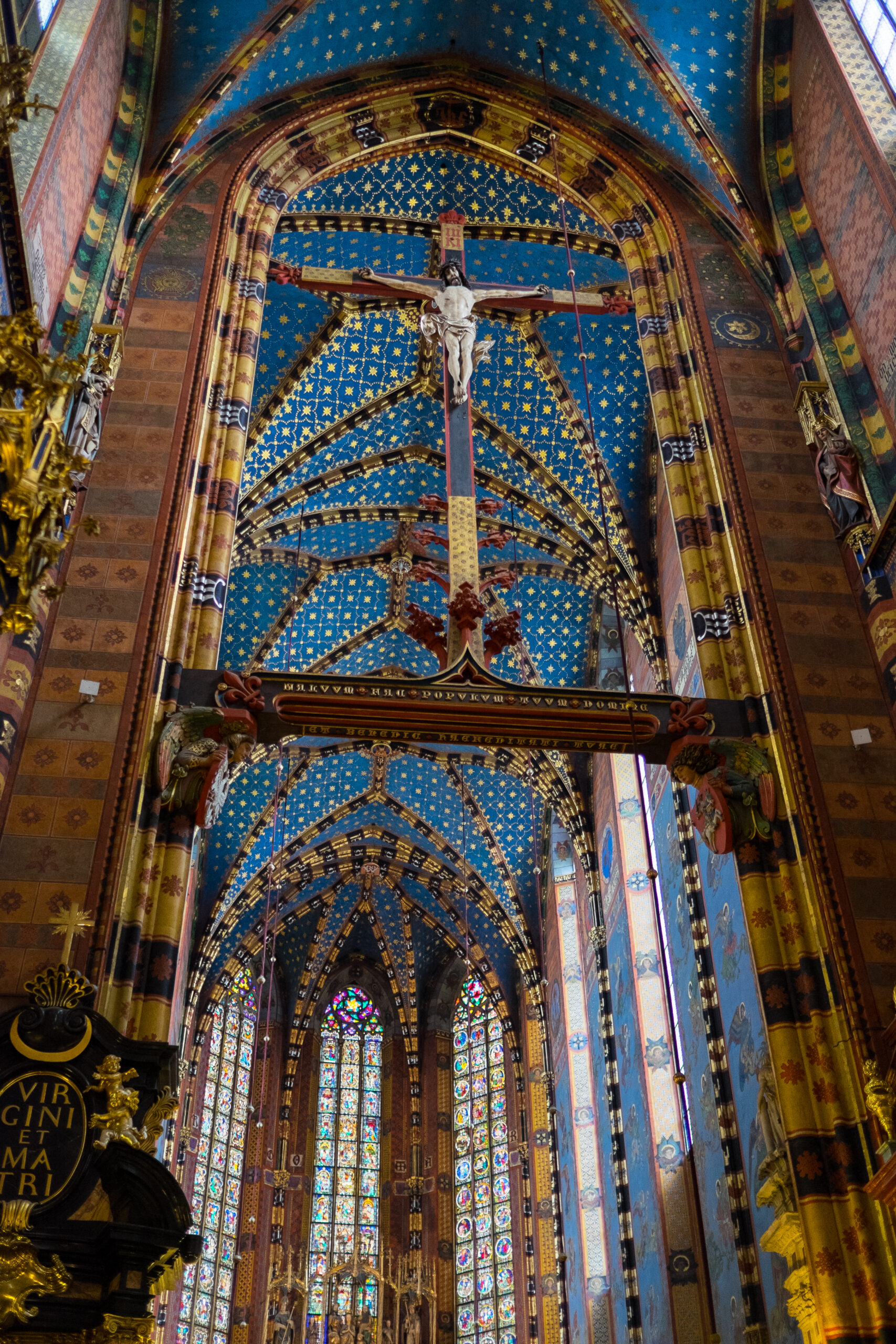
Stained-glass wings
The moth’s wings, composed of flat planes of color segmented by dark outlines, resemble a living stained-glass window. Through the reference to religious architecture, the work creates a sense of the divine, turning the body itself into a decorative, sacred surface.

Kinky Boots
Typical of Zula’s heroines, the figures show no hint of abashment; they confidently take up space by spreading their limbs wide. All three figures presented in the exhibition wear nothing more than long, high-heeled boots.
Are they dominatrices?
This choice frames their nakedness not as a natural state but as a cultural one. The boots make them appear “more naked”—intentional, staged, and provocative. Only humans know the shame of being naked, which is socially constructed. From this angle, the boots are not just fetishistic accessories. They intensify nakedness and, in turn, heighten eroticism.
Staged feminity
The red, sinister eyes enhance the dominatrix aura, further reinforced by the large, blue, eye-like patterns on her wings. The Moth(er) uses a visual strategy (often used in the animal world) to deceive and intimidate us into submission.
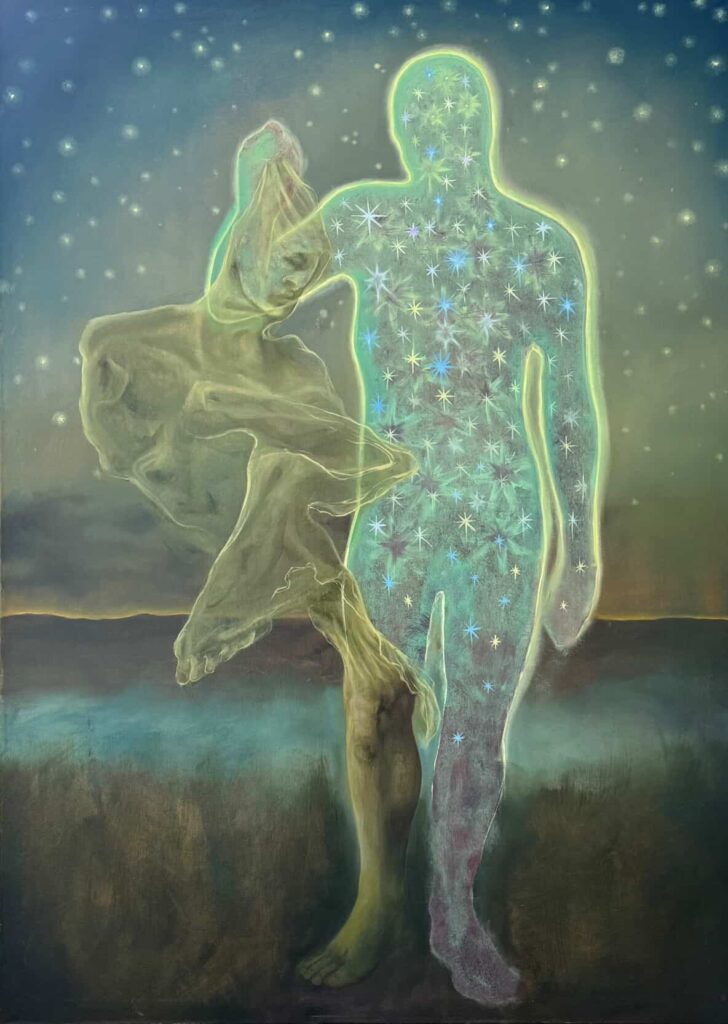
As a creature of the night, the moth resonates again with Gil’s celestial stripper. Both figures thrive in nocturnal spaces, where stars shine most intensely.
The eroticism combined with the vibrant colors, luxurious textiles, and glamour recalls the visual codes of drag and burlesque. The moth’s wings, in particular, their softness, fluffiness, and opulence, bring to mind the large fans often used by burlesque performers.
Is she about to perform an erotic fan dance?
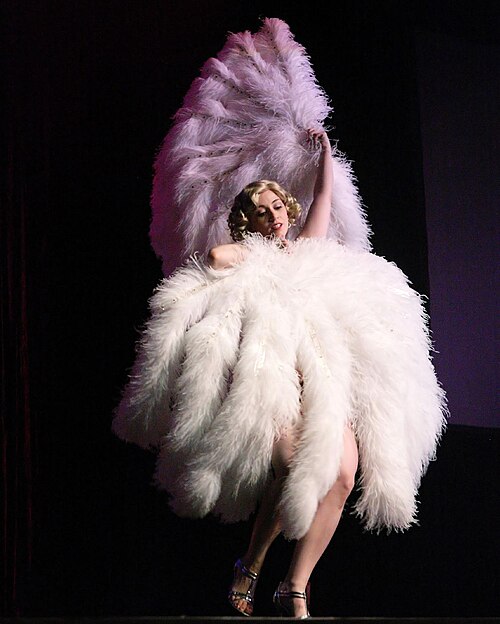
Photo Michael Albov
Utopian metamorphosis
The moth’s transformation can be read as a process of empowerment and emancipation. Zula confronts us with the figure’s final form, the culmination, in which the old body has been completely dissolved and rebuilt.
In this metamorphosis, a utopian ideal of total self-determination finds visual expression: an ideal of emancipation – “my body, my choice”. Whether embracing one’s own sexuality or undergoing a transition, the moth highlights the freedom to decide how one appears and experiences their own body. It is a fantasy of transformation unbounded by culture and even biology.
Michał Rutz